

This page presents a tested sequence of hands-on SDR lab exercises for undergraduate or first-year graduate digital communications courses, followed by project modules suitable for advanced wireless systems, DSP, and capstone courses.
Structuring SDR Labs
A good rule of thumb is to allot 1 to 2 weeks per lab assignment. We recommend structuring assignments so students:
- Develop and verify in Python simulation or cabled loopback first: Students verify their filter impulse responses, framing, and constellation plots on a deterministic loopback SDR where transmit and receive share the same local oscillator.
- Transition to over-the-air (OTA) radios: Once their signal processing pipeline works in loopback, students switch to an OTA SDR (or a pair of OTA SDRs) to observe real channel effects—thermal noise, multipath fading, and Carrier Frequency Offset (CFO)—and evaluate their synchronization and equalization algorithms.
Sample Lab Sequence
For an undergraduate or first-year graduate course in digital communications, the seven labs below build progressively toward a complete synchronized over-the-air transceiver:
-
Lab 1
Transmitting and Receiving a Complex Exponential
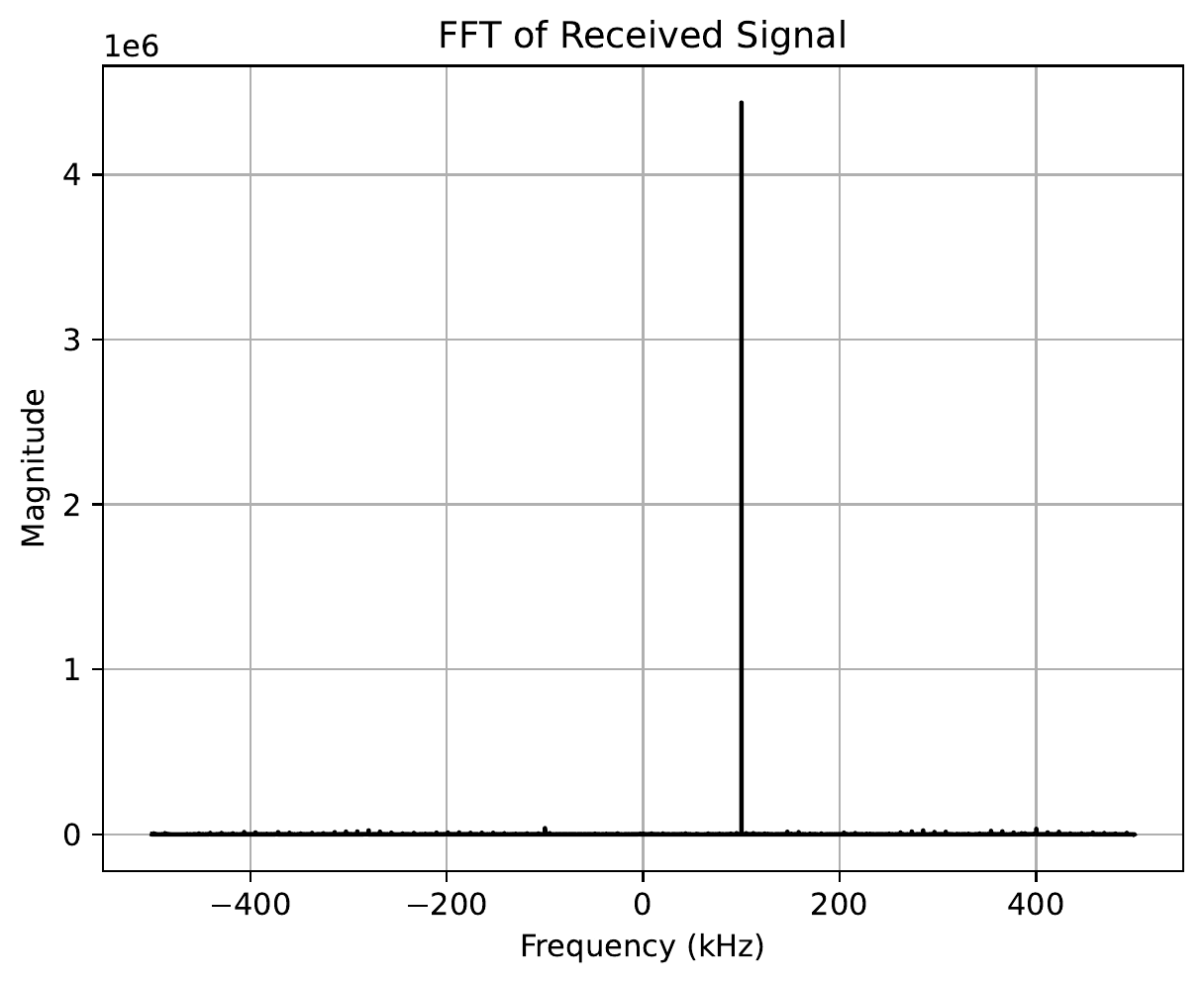
Students transmit and receive a 100 kHz complex sinusoid to learn basic SDR commands, DAC/ADC scaling, and spectral analysis in Python. Comparing single-SDR loopback against two independent SDRs reveals carrier frequency offset (CFO), motivating the need for frequency synchronization.
-
Lab 2
Transmitting and Receiving a Pulse-Shaped Waveform
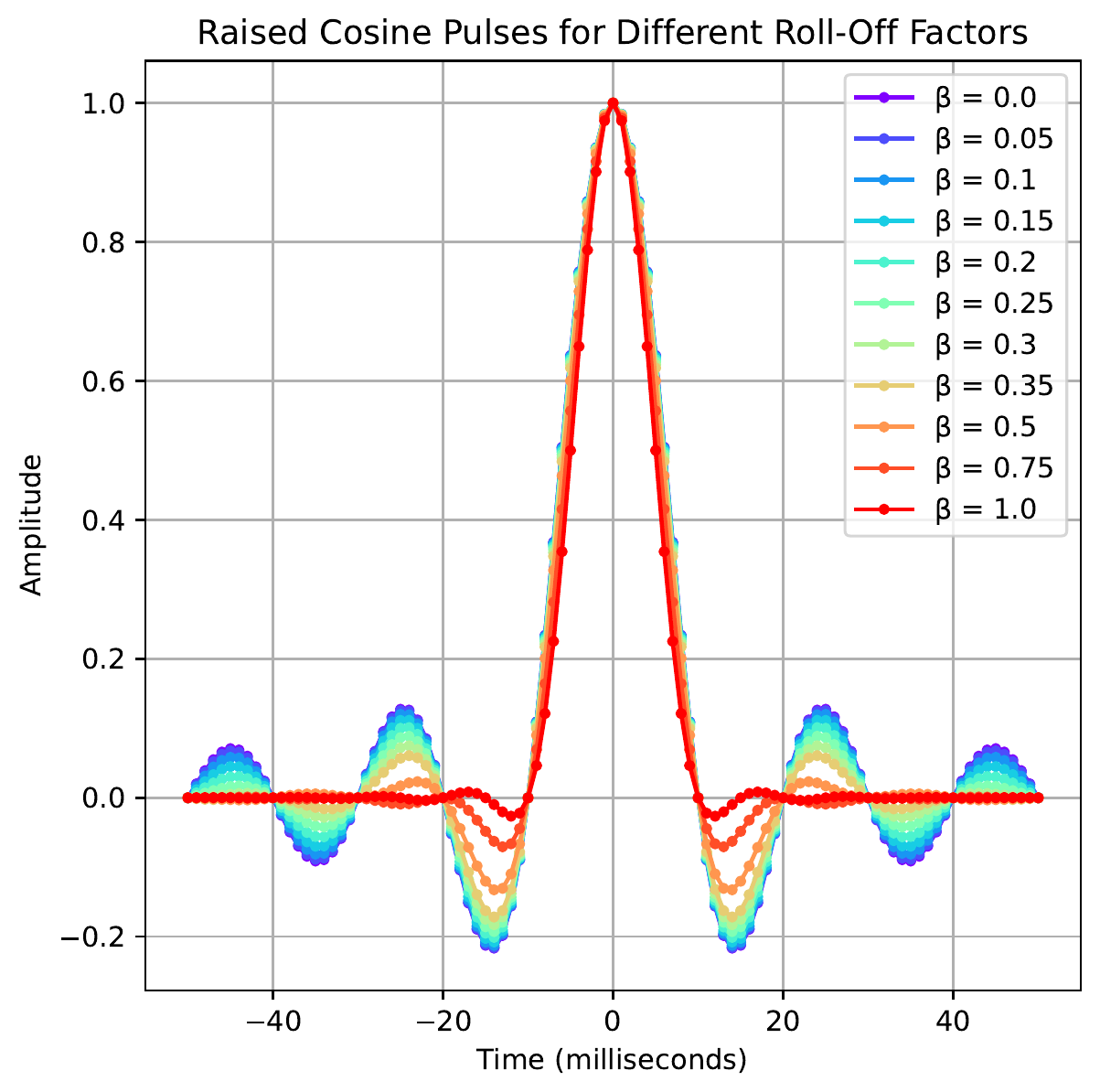
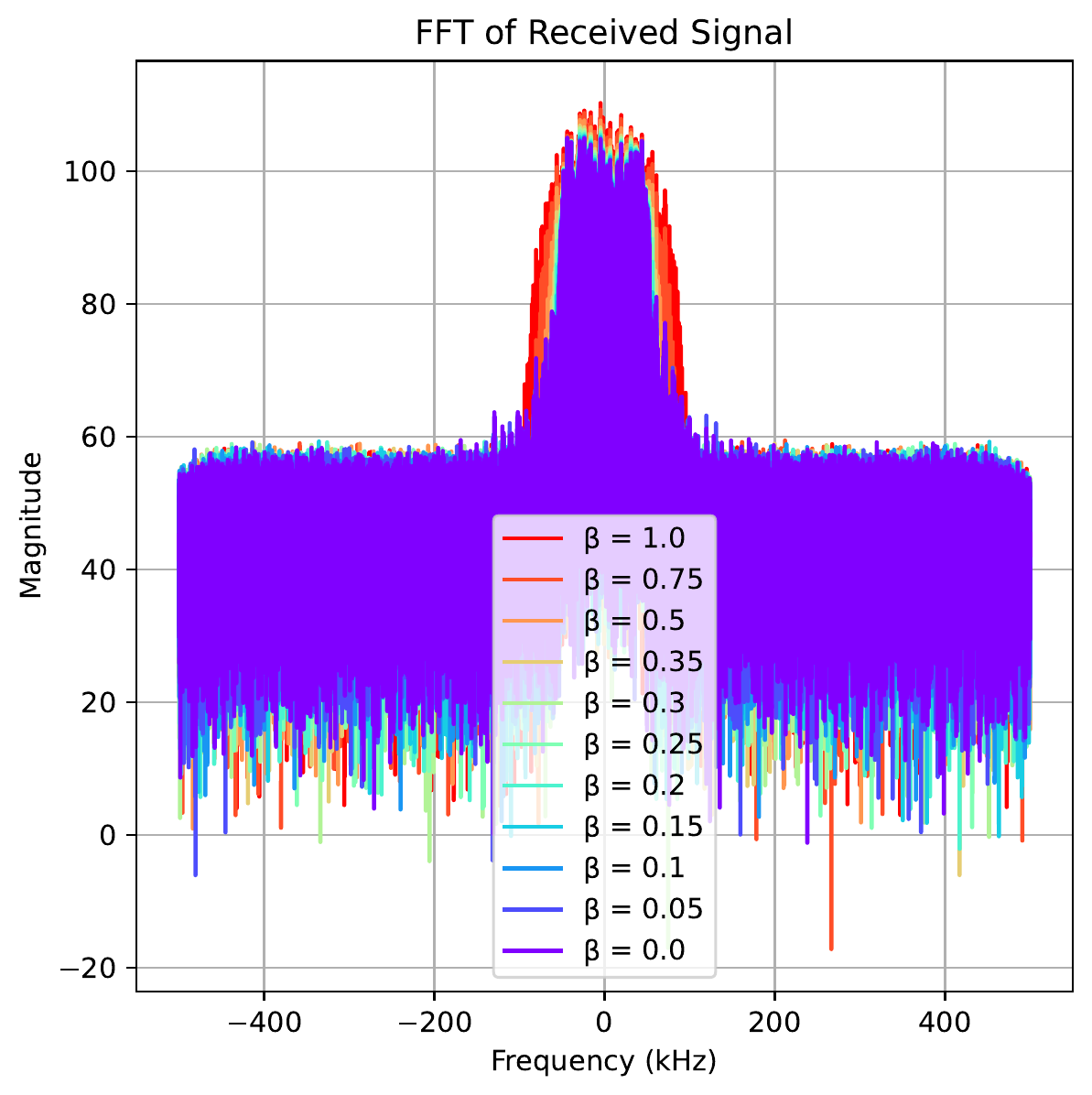
Students implement raised-cosine (RC) and root-raised-cosine (RRC) pulse-shaping filters in Python and transmit the shaped waveform over an SDR. They compute the FFT across roll-off factors (β) to inspect occupied bandwidth and verify the Nyquist inter-symbol interference (ISI) criterion in the time domain.
-
Lab 3
End-to-End Digital Communication System
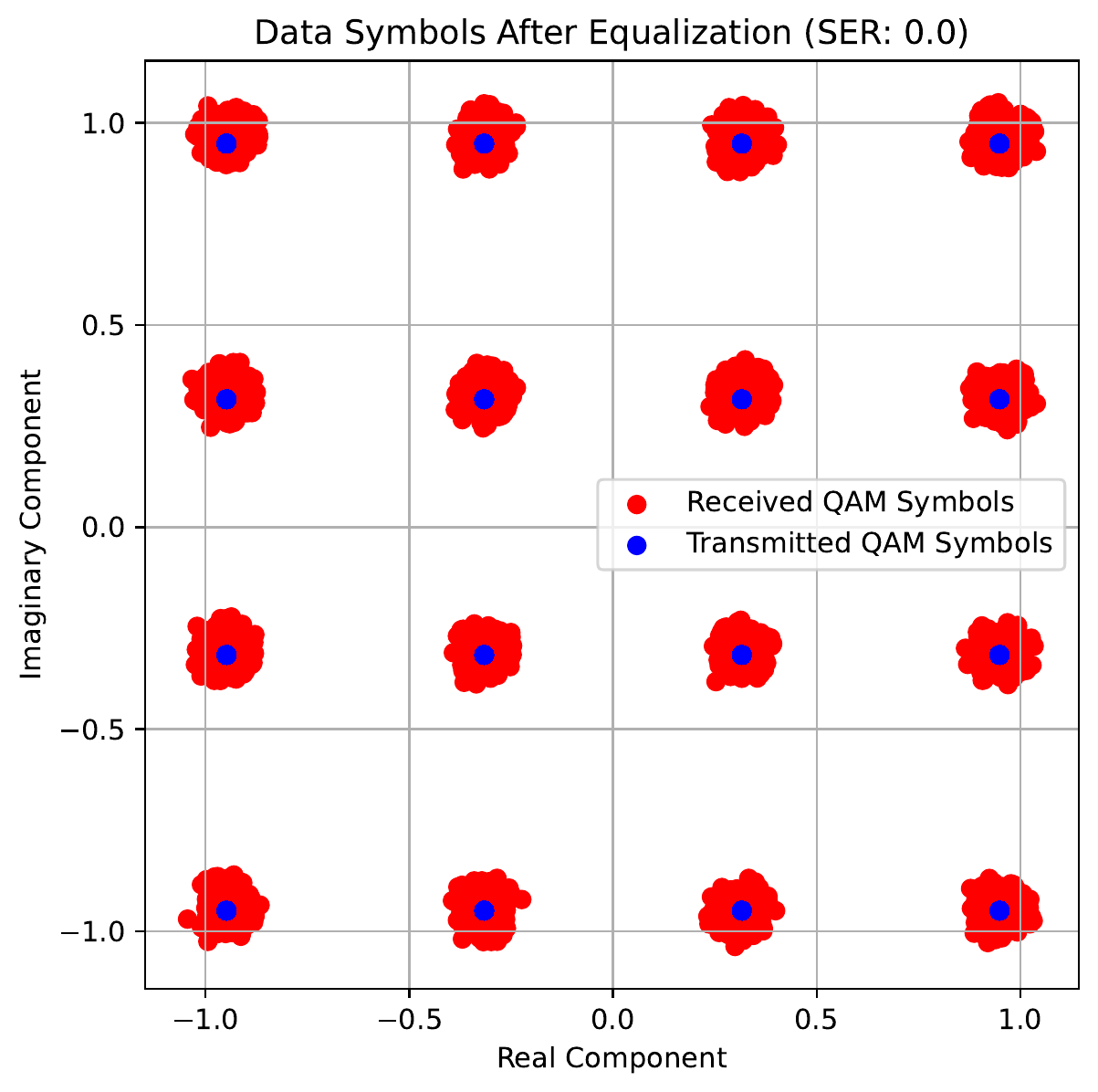
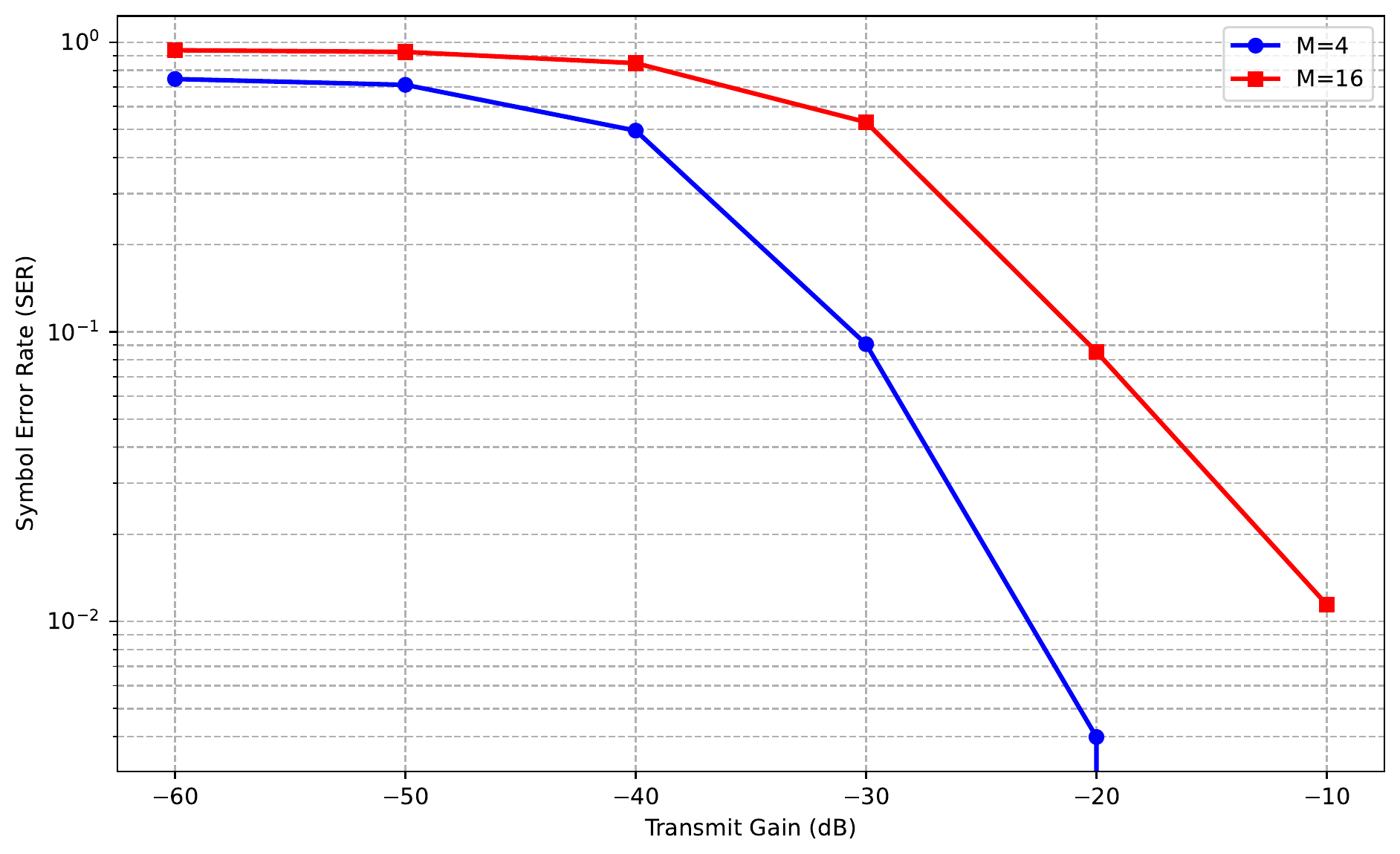
Students transmit RRC-shaped QPSK and M-QAM frames on a single SDR using cross-correlation for frame alignment and a receiver matched filter. They apply single-tap pilot equalization to correct narrowband phase and amplitude offsets, then sweep transmit gain to plot BER and SER against SNR.
-
Lab 4
Timing and Frequency Synchronization
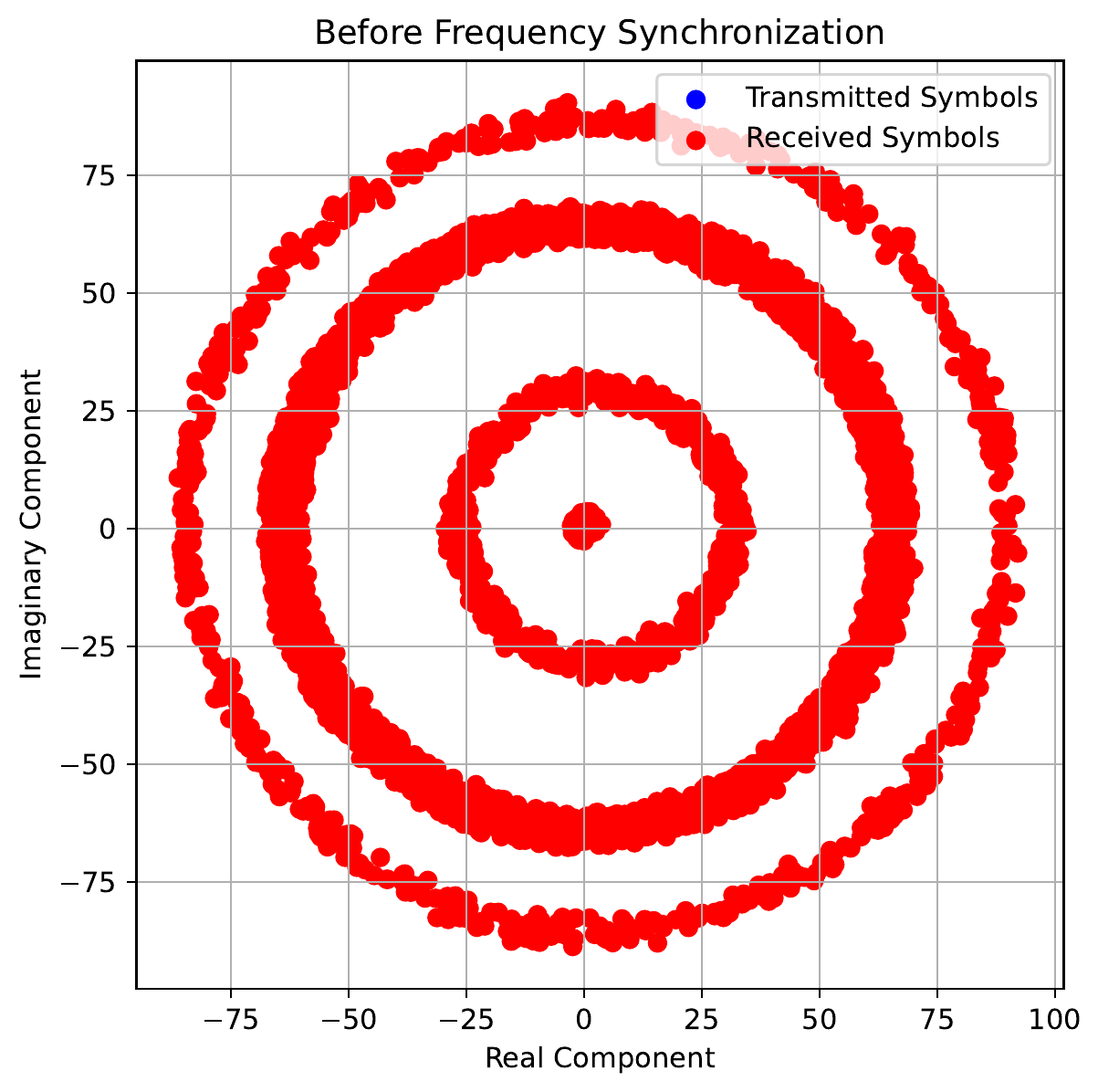
Students transition to two independent SDRs over the air by implementing symbol timing recovery, frame detection, and CFO correction. A practical combination pairs Maximum Output Energy (MOE) for symbol timing, Schmidl-Cox preamble correlation for frame detection, and the Moose algorithm for fine CFO estimation.
-
Lab 5
Dispersive Channel Estimation and Equalization
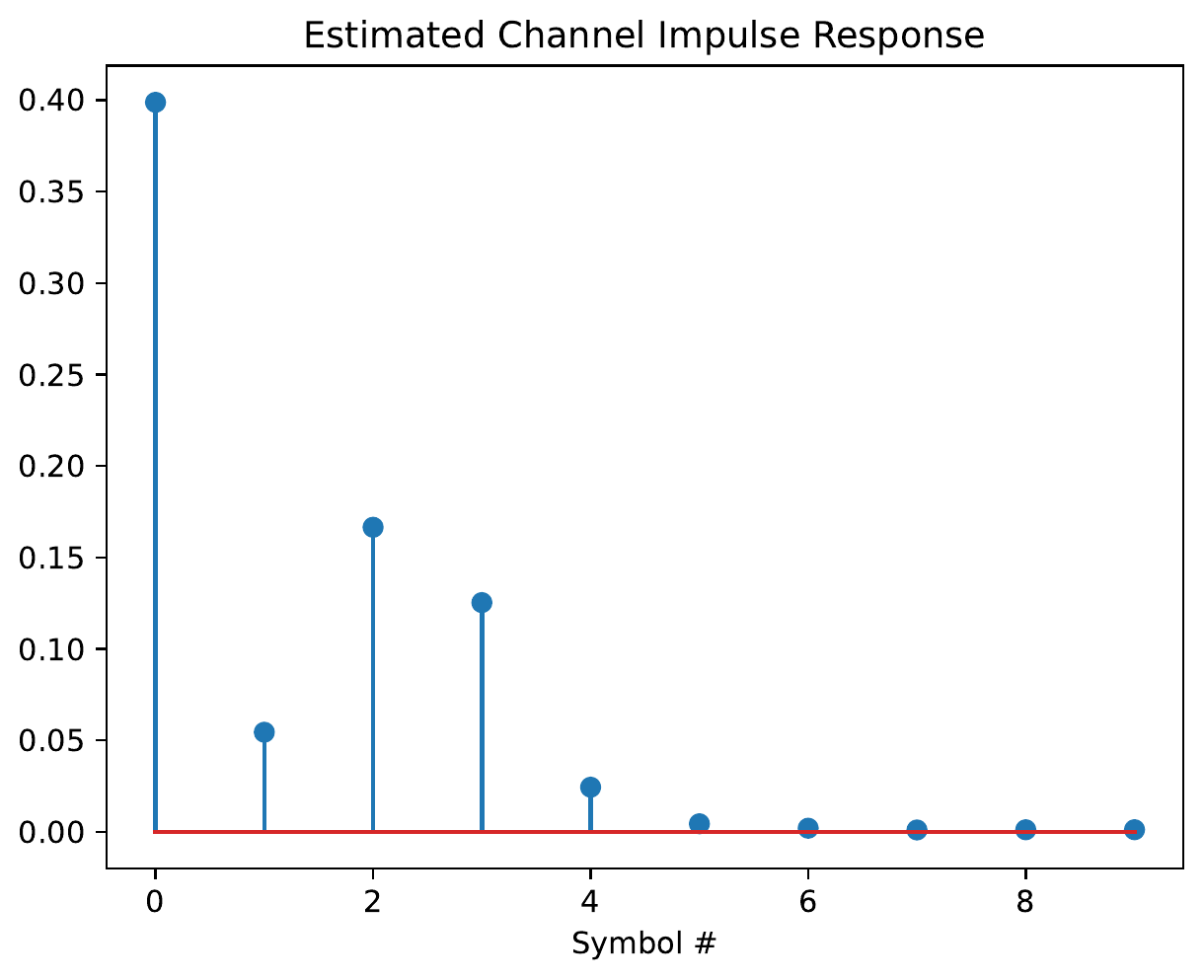
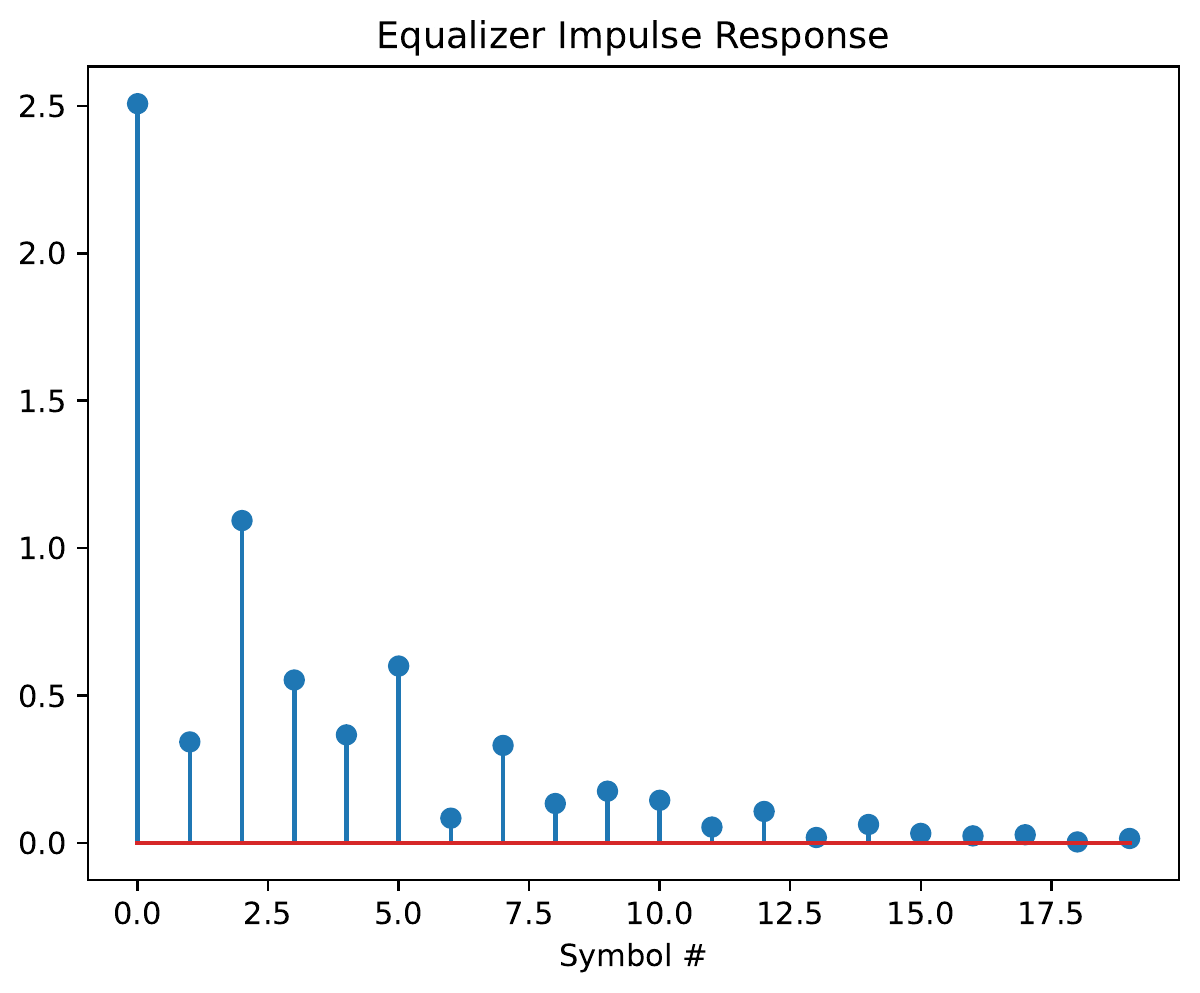
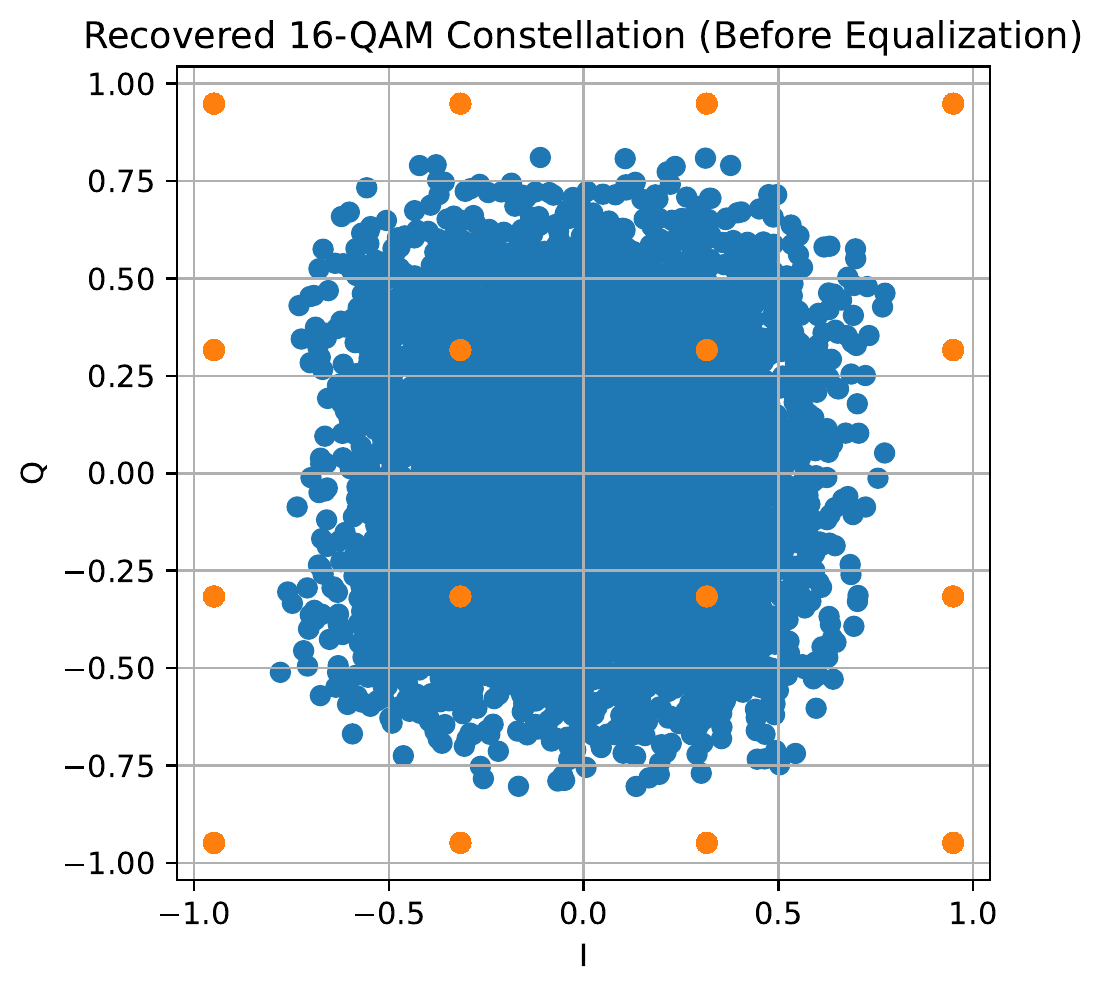
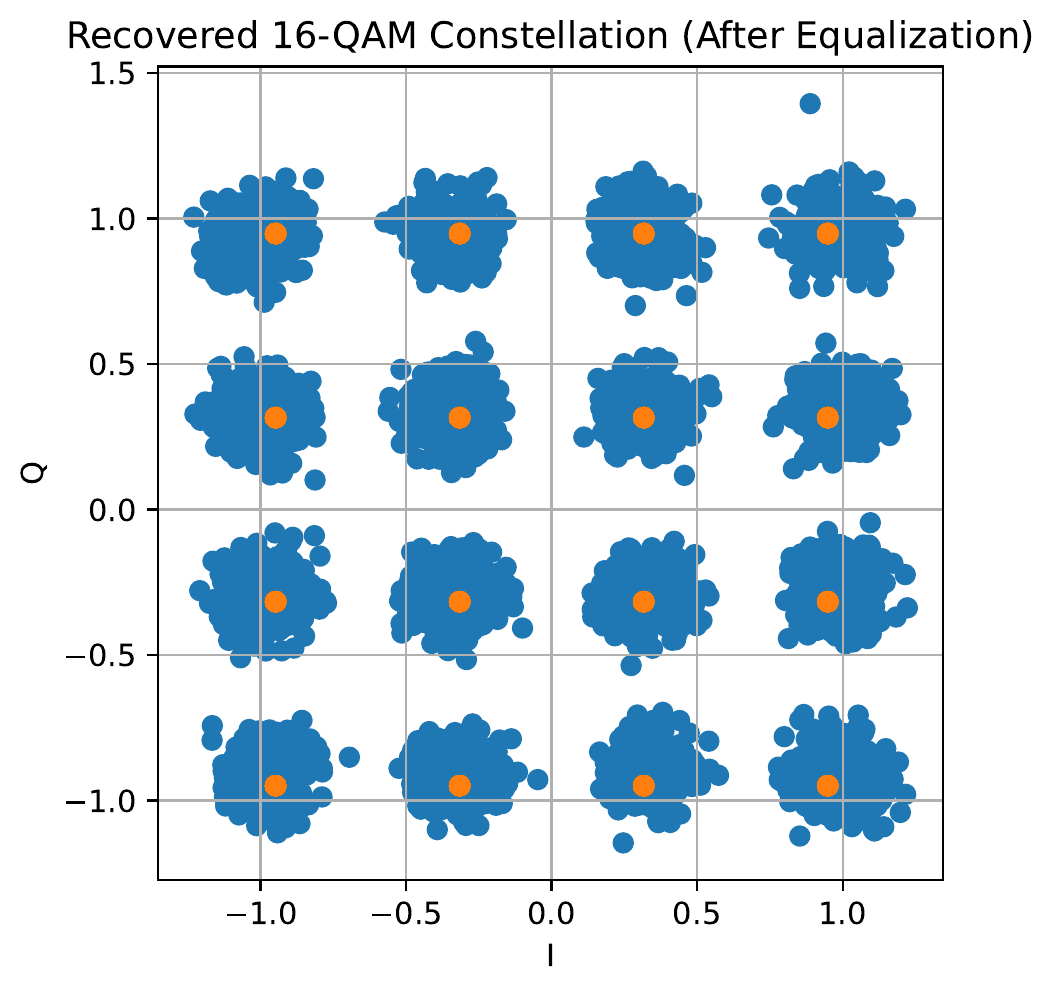
Students increase the symbol bandwidth or introduce multipath propagation to observe inter-symbol interference (ISI) across a frequency-selective channel. Using a known pilot training sequence, they estimate the multi-tap discrete-time channel impulse response and apply Zero-Forcing and MMSE equalizers to restore the constellation.
-
Lab 6
Orthogonal Frequency-Division Multiplexing (OFDM)
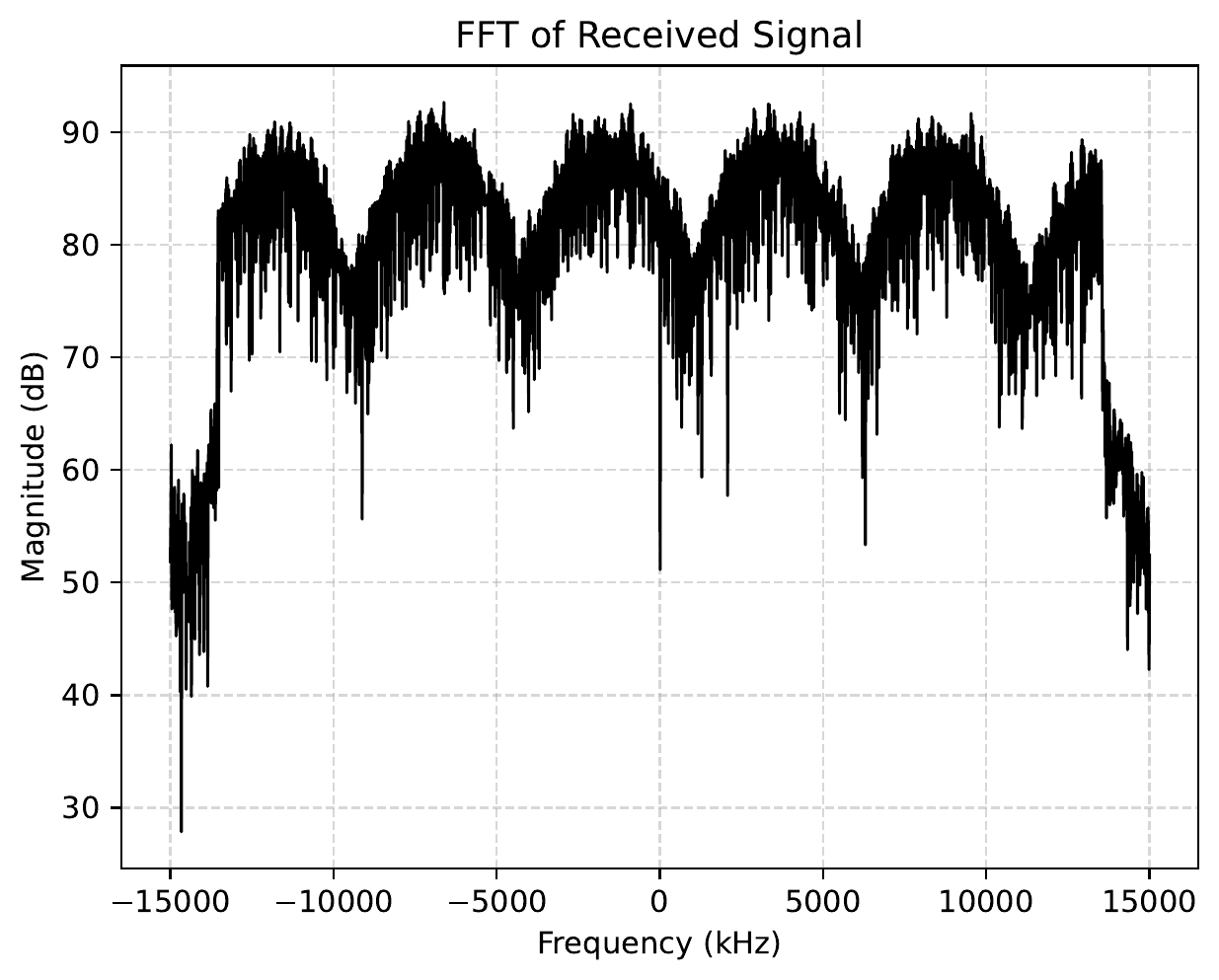
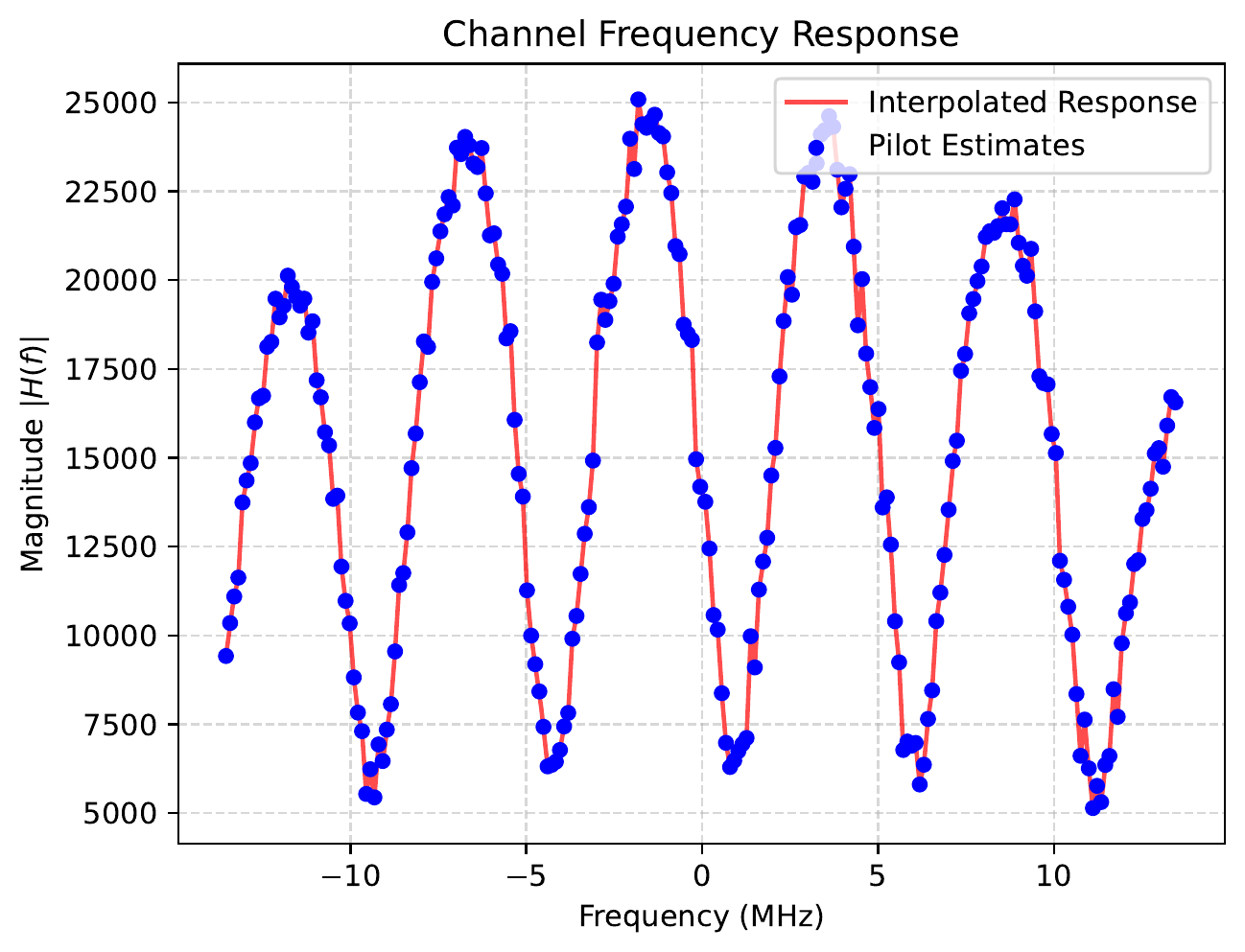
Students build an end-to-end OFDM transceiver in Python with QAM subcarrier mapping, IFFT/FFT block modulation, and cyclic prefix insertion and removal. Using pilot subcarriers over a wideband over-the-air link, they perform frequency-domain channel estimation and single-tap per-subcarrier equalization.
-
Lab 7
Error Correction Coding
Students integrate forward error correction (FEC) coding and bit interleaving into their synchronized over-the-air transceiver to protect against channel noise and fading. By comparing coded and uncoded transmissions across transmit gain settings, they measure the resulting coding gain in bit- and packet-error rate.
Graduate, Capstone & Special Topics
For advanced undergraduate electives, graduate courses, or quarter-long design projects, RemoteRF supports a wide range of topics across wireless standards, multi-antenna systems, and statistical signal processing:
4G LTE & 5G NR Standards
Implement key physical-layer blocks of the 4G LTE and 5G NR cellular standards in Python, or capture live cellular bands to identify nearby commercial base stations by decoding their broadcast Primary and Secondary Synchronization Signals (PSS/SSS).
MIMO & Phased Array Beamforming
Implement and evaluate transmit/receive beamforming, spatial multiplexing, and direction-of-arrival (DoA) estimation using 2×2 MIMO SDRs (ADALM-PLUTO MIMO, USRP 2901) or custom phased arrays.
Software-Defined GPS Receiver
Implement the signal processing pipeline of a GPS L1 C/A receiver in Python—including coarse/fine PRN code acquisition, delay-locked and phase-locked tracking loops, and navigation bit decoding.
ML-Based Wireless Signal Processing
Train and evaluate deep-learning models on live captured IQ datasets, including automatic modulation classification, RF fingerprinting, deep learning demapping, and reinforcement-learning dynamic spectrum access.